
 Google
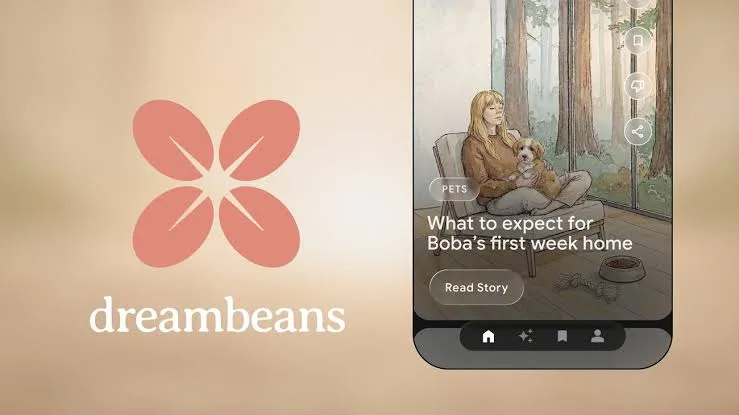
Dreambeans is one of Google Labs' most personal experiments yet, an AI app that reads your own Google data and turns it into a small set of illustrated daily stories about your life. Instead of an endless feed of other people's content, it surfaces a handful of things that actually matter to you, drawn from your Gmail, Calendar, Photos, YouTube, and Search, and presents them as short, illustrated cards. It is a deliberate counterpoint to infinite scroll: a calm, finite daily digest of your own world rather than the internet's.
The twist that got people talking is the illustration. Dreambeans renders its stories using Google's Nano Banana 2 image model, and the artwork can feature your own face and family, turning a calendar entry or a photo into a little illustrated moment. The result feels less like a news app and more like a personal, AI-animated journal that connects the dots across the Google services you already use.
This guide covers everything that matters about Dreambeans in 2026: what it is, how it builds stories from your data, the standout features, the strong privacy stance behind it, who can use it, and the limitations of an early, subscriber-only experiment. By the end you will know whether it is worth joining the waitlist.
What Is Dreambeans?
Dreambeans is an experimental Google Labs app, launched in 2026, that generates personalized, illustrated daily stories from your own Google data. It connects to services like Gmail, Google Calendar, Photos, YouTube, and Search history, then surfaces a curated set of suggestions and moments relevant to your life (a reminder tied to an upcoming event, a tip prompted by a recent purchase, a memory from your photos) and presents each as an illustrated card.
Google describes it as built on "Personal Intelligence," the idea of an assistant that understands your context from the data you already have, and uses it to be genuinely helpful rather than just engaging. In one example, a Gmail receipt for delivered puppy treats prompted the app to surface dog-training tips, while a calendar entry for a visiting friend led to suggestions for nearby dog-friendly restaurants. It connects signals across your apps the way a thoughtful personal assistant might.
The design philosophy is anti-addiction. Dreambeans caps the experience at roughly 10 to 14 stories per day, with no infinite scroll and no algorithmic rabbit holes. It is meant to be opened, read, and closed, leaving you informed about your own life rather than pulled into someone else's feed.
How Dreambeans Builds Your Stories
The app turns scattered signals across Google's services into a small, coherent daily digest.
- Connect your Google data. Dreambeans draws on sources like Gmail, Calendar, Photos, YouTube, and Search.
- It finds what matters. The AI identifies relevant moments, suggestions, and connections from those signals.
- It writes short stories. Each is a concise, useful card tied to something real in your life.
- It illustrates them. Nano Banana 2 generates artwork for each story, optionally featuring your own face and family.
- You read your daily set. A capped handful of stories, with no endless feed to fall into.
The effect is a personalized briefing that connects dots you might miss, pairing a receipt with a relevant tip, or an event with a helpful suggestion. Because it is bounded and grounded in your own context, it aims to be useful and calming rather than attention-grabbing.
Standout Features
A few choices give Dreambeans its distinctive character.
1. Personalized, Cross-App Intelligence
By drawing on multiple Google services at once, Dreambeans connects signals that live in separate apps (your email, your calendar, your photos) into a single, contextual story. That cross-app awareness is what makes it feel like a personal assistant rather than a single-source feed.
2. Illustrated Stories With Your Likeness
Stories are illustrated with Nano Banana 2, and the artwork can include your own face and family, turning everyday moments into charming, personalized illustrations. It is a playful, distinctly human touch that sets the app apart from text-only digests.
3. A Deliberate Daily Cap
The 10-to-14-story limit is a feature, not a constraint. With no infinite scroll, Dreambeans respects your time and attention, a refreshing stance in an era of feeds engineered to keep you scrolling.
4. Private by Design
Your stories are yours alone: no third party can see a user's generated stories, and only the account holder can access them. The personalization choices you make in Dreambeans are also kept separate from those in other Google products.
Privacy and Your Data
A tool that reads your Gmail, Calendar, and Photos lives or dies on trust, and Google has foregrounded privacy in Dreambeans. Generated stories are visible only to the account holder, and no third party can see them. The personalization choices you make inside Dreambeans are kept separate from Personal Intelligence settings in other products like the Gemini App or AI Mode, so using it does not silently reshape your experience elsewhere.
That said, the very premise, granting an app access to a broad swath of your personal Google data, is something to weigh consciously. The privacy controls are designed to keep your stories contained, but you should be comfortable with the data access the experience requires before opting in.
Pricing and Availability
Dreambeans is an early-access experiment with notably limited availability. Details below reflect its launch; always confirm current access on the official Labs page.
| Aspect | Details |
|---|---|
| Who can use it | Google AI Ultra subscribers in the US, 18 and older, at launch. |
| Everyone else | A waitlist is open to others while access expands. |
| Cost | Bundled with a Google AI Ultra subscription rather than sold separately. |
In short, Dreambeans is currently gated behind Google's top-tier AI Ultra plan and limited to US adults, with a waitlist for everyone else. As a brand-new Labs experiment its availability and features are likely to change, and broader access may follow if it proves popular.
Limitations to Keep in Mind
| Limitation | What to know |
|---|---|
| Very limited access | At launch it is restricted to US-based Google AI Ultra subscribers aged 18+, with a waitlist for others. |
| Requires broad data access | It reads across Gmail, Calendar, Photos, and more, so weigh that access against your comfort level before opting in. |
| Experimental product | As a new Labs experiment, its features, availability, and future are uncertain and subject to change. |
| Niche purpose | It is a personal daily-digest experience, not a productivity workhorse or a general assistant. |
| Quality varies | AI-curated stories and illustrations can miss the mark; usefulness depends on the richness of your connected data. |
Final Verdict
Dreambeans is one of the more imaginative things Google Labs has shipped: a personal-intelligence app that turns your own Google data into a small, illustrated daily story about your life, deliberately capped to respect your attention. The cross-app awareness, the Nano Banana 2 illustrations featuring your own likeness, and the anti-infinite-scroll philosophy make it feel genuinely fresh in a world of engagement-maximizing feeds.
It is locked behind a top-tier subscription, limited to US adults, and asks for broad access to your personal data, so it is very much an early experiment for the curious and well-resourced. If that fits you, Dreambeans is worth the waitlist. Pair it with the Gemini App for everyday assistance, and browse more free AI tools to round out your stack.
Frequently asked questions
What is Google Dreambeans?
Dreambeans is an experimental Google Labs app that reads your own Google data (Gmail, Calendar, Photos, YouTube, and Search) and turns it into a small set of personalized, illustrated daily stories about your life. The illustrations use Google's Nano Banana 2 model and can feature your own face and family.
Is Dreambeans free?
Not separately. At launch it is available only to Google AI Ultra subscribers in the US aged 18 and older, bundled with that top-tier plan. A waitlist is open to everyone else while access expands.
How does Dreambeans work?
It connects to your Google services, identifies relevant moments and suggestions across them, writes short stories tied to your real life, and illustrates each with Nano Banana 2. It caps the day at roughly 10 to 14 stories, with no infinite scroll or algorithmic rabbit holes.
Is Dreambeans private?
Google has emphasized privacy: only the account holder can see their generated stories, and no third party can access them. Your personalization choices in Dreambeans are also kept separate from Personal Intelligence settings in other Google products. Still, weigh the broad data access it requires before opting in.
What makes Dreambeans different from a news feed?
Instead of an endless feed of other people's content, Dreambeans shows a small, finite set of stories about your own life, drawn from your data. The daily cap and lack of infinite scroll are deliberate, designed to be useful and calming rather than attention-grabbing.
Can I get Dreambeans outside the US?
Not at launch. It started as a US-only experiment for Google AI Ultra subscribers. A waitlist is available for everyone else, and access may broaden over time as the Labs experiment develops.