
 Anthropic
The Claude API is how developers build with Anthropic's Claude models in their own software. Where the Claude chat app is for people, the API is for products: a developer interface that lets you send text, documents, and images to the same frontier models that power Claude and get back generated text, structured data, or tool calls, programmatically and at scale, inside whatever app you are building.
It has become one of the most widely used model APIs in the industry, and for good reason. The Claude models consistently top independent benchmarks for coding and reasoning, the API is clean and well documented, and Anthropic has layered on the features serious builders need: a large context window, prompt caching, batch processing, tool use, and the Model Context Protocol for connecting models to external systems. If you have used an AI feature in a modern app and it felt thoughtful and well-written, there is a fair chance Claude was behind it.
This guide covers everything that matters about the Claude API in 2026: what it is, the model lineup and how to choose, the core capabilities, how pricing works across models, the cost levers that make it affordable at scale, how it relates to Claude Code and the chat app, and the limitations to keep in mind. By the end you will know whether to build on it.
What Is the Claude API?
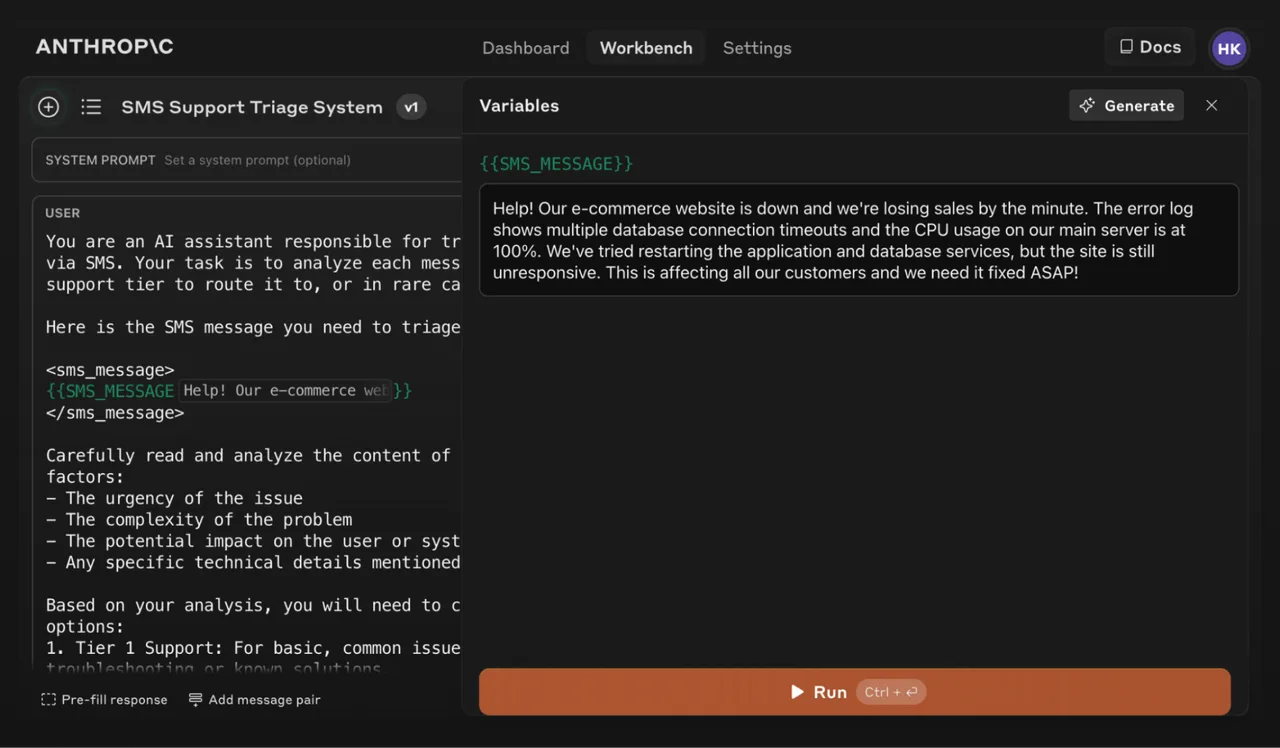
The Claude API is a developer service from Anthropic that exposes the Claude models over a simple web interface. You send a request containing your prompt (plus any documents, images, or instructions) and the API returns the model's response. You manage everything through the Anthropic Console: get API keys, test prompts in an interactive Workbench, watch usage, and handle billing. Official SDKs in popular languages make integration straightforward.
The point of the API is to put Claude's intelligence inside your own product. Instead of sending users to a chat app, you build the capability directly into your software: a writing assistant, a coding tool, a customer-support bot, a document analyzer, an autonomous agent. The model does the language and reasoning work; you control the experience around it.
Anthropic also makes the same models available through major cloud platforms, so teams already on a given cloud can consume Claude through their existing infrastructure and billing. However you reach it, the models and capabilities are the same.
The Model Lineup
The API offers the full Claude family as a tiered lineup, so you can match capability against speed and cost on a per-call basis.
| Tier | Best for | Trade-off |
|---|---|---|
| Opus | The most capable tier, for the hardest reasoning, complex coding, and deep analysis where quality matters most. | Highest cost per token. |
| Sonnet | The balanced workhorse: fast, smart, and economical for the majority of production workloads. | Not quite Opus-level on the very hardest tasks. |
| Haiku | The speed tier: low latency and low cost for high-volume, simpler, or latency-sensitive jobs. | Less depth on complex multi-step reasoning. |
The practical pattern most teams adopt: build on Sonnet because it handles the bulk of work fast and affordably, route the hardest requests to Opus for maximum care, and use Haiku for high-volume, latency-sensitive calls where cost per request dominates. Many production systems mix all three, choosing the model per task.
Core Capabilities
Beyond raw generation, the API ships the features production applications actually need.
1. A Large Context Window
The models accept very large inputs (up to a million tokens of context on the top tiers) so you can feed entire documents, codebases, or long histories into a single request and have the model reason across all of it. That breadth is one of the main reasons developers choose Claude for document-heavy and code-heavy applications.
2. Tool Use and Agents
Claude can call tools you define (functions, APIs, databases, search), deciding when to use them and weaving the results into its response. This is the foundation for building agents that take actions, not just generate text. Combined with the Model Context Protocol (MCP), the open standard Anthropic created for connecting models to external systems, it lets Claude reach live data and services in a structured way.
3. Vision and Document Input
The API is multimodal on input: send images, screenshots, charts, and PDFs alongside text, and Claude will read and reason over them. That makes it practical for document processing, data extraction, and any workflow that mixes visual and textual material.
4. Adaptive Thinking and Effort Controls
The latest models can decide how much reasoning to spend on a given task, and expose controls that let you tune the trade-off between depth and speed. You can dial up careful, extended reasoning for hard problems or keep responses fast and cheap for simple ones, which helps manage both quality and cost.
Pricing
The Claude API is usage-based, billed per million tokens of input and output, with no monthly minimum, so you pay only for what you use. Rates scale with model capability. Figures below are standard published rates; always confirm current pricing on the official site.
| Model tier | Input (per M tokens) | Output (per M tokens) |
|---|---|---|
| Opus (flagship) | ~$5 | ~$25 |
| Sonnet (balanced) | ~$3 | ~$15 |
| Haiku (fast) | ~$1 | ~$5 |
A token is roughly three-quarters of a word, so a typical request costs a fraction of a cent to a few cents depending on length and model. Output tokens cost more than input, which is worth remembering when you design prompts and expected response lengths.
Cost Levers That Matter at Scale
The headline rates are only the starting point. Anthropic provides several levers that dramatically cut real-world cost for production workloads.
- Prompt caching: reuse a large, unchanging prompt prefix (a system prompt, a document, a codebase) and pay a fraction of the cost on cached tokens, up to around 90% cheaper. Ideal for repeated queries against the same context.
- Batch processing: submit large volumes of non-urgent requests for asynchronous processing at roughly half price. Perfect for bulk jobs like classification or summarization.
- Model routing: send easy requests to Haiku and reserve Opus for the hard ones, so you only pay top rates where they earn their keep.
- Effort controls: cap how much reasoning the model spends on a task to keep simple calls cheap.
Used together, these can reduce the effective cost of a production application by a large margin compared with naively calling the flagship model on every request. For anyone building at volume, they are the difference between an API that is affordable and one that is not.
API, Claude Code, or the Chat App?
Anthropic offers three ways to use Claude, and they serve different needs.
| Product | For | You get |
|---|---|---|
| Claude app | People doing work directly | A polished chat interface, Projects, and Artifacts. |
| Claude Code | Developers coding | An agentic tool that edits real codebases in your terminal and IDE. |
| Claude API | Builders embedding Claude | Programmatic access to the models inside your own software. |
The short version: use the chat app to work with Claude yourself, use Claude Code to have it work in your codebase, and use the API to put Claude inside the product you are building for others.
Real-World Use Cases
AI Features in Products
The most common use is adding intelligence to an app (writing assistants, summarizers, chatbots, classification, and content generation) where Claude's natural language and reliability stand out.
Agents and Automation
With tool use and MCP, developers build agents that take real actions (querying systems, calling APIs, and completing multi-step tasks) rather than just producing text.
Document and Code Processing
The large context window and vision input make the API a strong choice for analyzing contracts, extracting data from documents, and reasoning over large codebases at scale.
Limitations to Keep in Mind
| Limitation | What to know |
|---|---|
| Requires development work | The API is for builders, so you need to write code to use it. Non-developers want the Claude app instead. |
| Costs scale with usage | Pay-per-token means heavy or careless use adds up. Use caching, batching, and model routing to control spend. |
| No image or video generation | Claude reads images but does not create them. Pair it with a dedicated generator for visual output. |
| Rate limits | Accounts have usage tiers and rate limits that scale as you grow; very high throughput needs planning and possibly higher tiers. |
| Still hallucinates | Claude is careful but not infallible. Validate outputs and add guardrails for anything high-stakes in production. |
Final Verdict
The Claude API is one of the best foundations available for building AI into software. Top-tier coding and reasoning, a large context window, first-class tool use and MCP support, and genuine cost levers like prompt caching and batch processing make it a practical, scalable choice for everything from a single AI feature to a full agentic product. Usage-based pricing with no minimum means you can start tiny and grow.
It is a developer product, so it is not for non-coders, and like any model it needs guardrails in production, but for teams building serious AI features, the Claude API is at the front of the pack. It complements the Claude app and Claude Code, and you can explore more free AI tools to round out your stack.
Frequently asked questions
What is the Claude API?
It is Anthropic's developer interface for building with the Claude models in your own software. You send prompts, documents, and images and get back generated text, structured data, or tool calls, programmatically and at scale, managed through the Anthropic Console.
How much does the Claude API cost?
It is usage-based, billed per million tokens with no monthly minimum. Approximate rates are Opus around $5 input / $25 output, Sonnet around $3 / $15, and Haiku around $1 / $5 per million tokens. Caching and batch processing can cut real costs substantially.
How is the Claude API different from the Claude app?
The Claude app is a chat interface for people to use Claude directly. The API is for developers to embed the same models inside their own products programmatically. There is also Claude Code, an agentic tool for editing real codebases.
Can I reduce Claude API costs?
Yes. Prompt caching can make repeated context up to ~90% cheaper, batch processing roughly halves the cost of non-urgent jobs, and routing easy requests to Haiku while reserving Opus for hard ones keeps spend down. These levers matter a lot at scale.
Does the Claude API support tool use and agents?
Yes. Claude can call tools and functions you define and supports the Model Context Protocol (MCP) for connecting to external systems, which is the foundation for building agents that take real actions rather than only generating text.
What context window does the Claude API offer?
The top model tiers support up to a million tokens of context, so you can send entire documents, long histories, or large codebases in a single request and have Claude reason across all of it.